No rituals selected yet.
Browse Pooja Packages → Save 35%
Pind daan in Ujjain
Pind daan in Ujjain
Vidhivat Pind Daan at Kshipra ghat, Ujjain Experienced Purohit (Ujjain rituals) Complete...
from
₹7,100
₹11,000
Pind Daan at Ram Ghat, Ujjain —
the Kshipra, in one of the seven sacred cities.
Pind daan on the Kshipra at Ram Ghat, or at the Siddhwat temple, performed by an Ujjain Tirth Purohit. Pinda and full samagri prepared before you arrive. Pitrupaksha (Sep 26 — Oct 10, 2026), monthly Amavasya, the annual Tithi, and year-round.
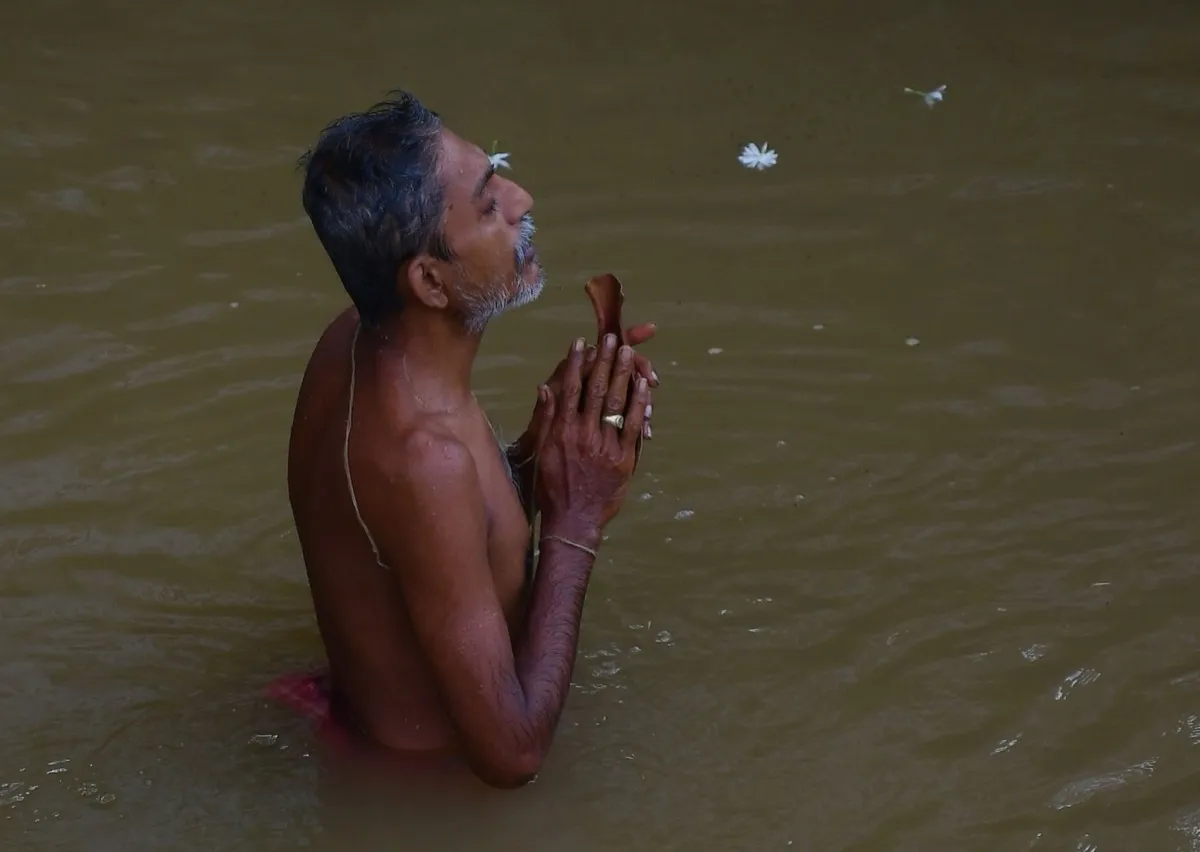
Every package includes an experienced Vedic pandit and the required puja samagri. The difference is in boat, location, stay, and tradition.
Save 35%
Vidhivat Pind Daan at Kshipra ghat, Ujjain Experienced Purohit (Ujjain rituals) Complete...
No packages match this filter. Talk to a family advisor →
What's included
We've seen too many families face hidden boat fees, samagri costs, and "dakshina" pressure on the day. Here's exactly what's covered, and what isn't.
Included
Verified Ujjain Tirth Purohit from the Shipra ghats — the priestly lineage that conducts pind-daan, tarpan and shradh at Ram Ghat and the Siddhwat temple through the Pitrupaksha calendar and on the annual death-anniversary Tithi.
Included
The pinda is prepared for you before the rite — rice, barley and wheat flour worked with til, dried milk and honey, in the number the vidhi calls for. One pinda is offered for the departed; the rest are offered to the ancestral line.
Included
Til, jau, kusha, gangajal, kalash, white cloth, flowers and the dakshina thali — laid out at the ghat before your family arrives. Nothing to buy on the day.
Included
Mahakaleshwar darshan can be added to any in-person package — the temple is one of the twelve jyotirlingas and its Bhasma Arti begins at 4 a.m., so it is usually taken the morning before the ghat rite. Combined pind-daan with tarpan or asthi visarjan on the same visit is arranged on request.
Included
One person on WhatsApp through your entire booking — fluent in Hindi, English and major regional languages — before and after the ceremony.
Included
WhatsApp message from the Ujjain pandit the same evening, naming the gotra and the ancestors for whom the pinda was offered.
Included*
Ancestral rites at Ujjain are performed at Ram Ghat on the Kshipra and at the Siddhwat temple — the two sites held in the city’s long sthala-parampara for pitru karma. We arrange the ghat slot, the purohit and the samagri at whichever of the two your rite calls for. Ujjain is one of the seven sacred cities and sits on the Kshipra, which Hindu tradition counts among the holy rivers.
Not included
Not included. Ujjain is on the Malwa Plateau in Madhya Pradesh, with its own railway station; Indore is the nearest airport. October to March is the comfortable window. We can recommend trusted operators.
Not included*
Not included in the base package. Ujjain fills up during Simhasth Kumbh and through Pitrupaksha, so tell us early if you need a room held.
Not included
Pind-daan packages cover the pinda offering only. For immersion of the asthi in the Shipra, see /asthi-visarjan-in-ujjain/. Combined packages available on request.
Step 03 · How it works
From your first call to same-day confirmation — we handle every coordination, so the family can focus on what matters.
Choose a package and complete payment online. Our team calls within 2 hours to confirm the date and the ghat.
~ 5 minutes
Provide the gotra, the names of the departed up to three generations, the preferred date — the annual Tithi or a Pitrupaksha day — and any family vidhi you want observed.
~ 10 minutes
The purohit performs the full vidhi on the Kshipra — Sankalp in your name and gotra, Ganga-poojan, the pinda offering, then pitru-tarpan. Families who prefer the Siddhwat temple are taken there instead; say which when you book.
2–3 hours
Same-evening WhatsApp confirmation from the Ujjain pandit with the offering detail. Photos and video are opt-in add-ons.
Same day
When to perform
The Garuda Purana Pretakalpa prescribes pind-daan in four windows: Pitrupaksha, the fortnight of Ashwina Krishna Paksha (26 September to 10 October 2026), closing on Sarva Pitru Amavasya; monthly Amavasya; the annual death-anniversary Tithi; and Sankranti days. At Ujjain the rite is performed at Ram Ghat on the Kshipra or at the Siddhwat temple, in a city Hindu tradition counts among the seven sacred puris — Kalidasa called it a town fallen from heaven to bring heaven to earth. We will be straight about the register: the Vayu Purana names Gaya as the canonical pind-daan tirtha, and Ujjain carries no equivalent single-verse Mahatmya for the pinda rite. What it carries is Sapta Puri standing, the Kshipra, and a long local parampara of pitru karma at those two sites. Both are valid; the merit profile differs. For the highest Mahatmya, see our Gaya and Prayagraj pages.
Performed by Tirth Purohits at Ram Ghat on the Kshipra, Ujjain since 2019
Two ways to perform
Performed by your own hands at Ram Ghat on the Kshipra under an Ujjain Tirth Purohit. The karta recites the Sankalp, offers the pinda, and completes pitru-tarpan at the water.
Starts at ₹7,100
For families abroad or unable to travel. The Angirasa Smriti authorises Pratinidhi Karma precisely when the karta is at a distance: the Sankalp is recited remotely in your name and gotra, the Ujjain purohit offers the pinda as your Pratinidhi, and you join by live video. Arranged on request — ask us and we will confirm the date and the cost.
Starts at
Complete guide
An editorial reference covering the ritual, the place, eligibility, timing, and what to keep ready — written for families weighing the decision.
Pind daan at Ujjain is performed at Ram Ghat on the Kshipra, or at the Siddhwat temple — the two sites the city holds in its own tradition for pitru karma. The Garuda Purana Pretakalpa sets four windows for the rite: Pitrupaksha, monthly Amavasya, the annual death-anniversary Tithi, and Sankranti days. We will say the honest thing: the Vayu Purana names Gaya as the canonical pind-daan tirtha, and Ujjain carries no equivalent verse for the pinda rite — what it carries is standing as one of the seven sacred cities, the Kshipra, and a local parampara families can actually reach every year. Ghat pind daan is ₹7,100. For the city and the temples themselves, read Ujjain: Mahakaleshwar, the temples and the Shipra.
Select your package and complete booking. Our team calls within 2 hours to confirm details.
Provide your gotra, departed soul's name, and any special requirements.
Experienced pandit performs the complete ceremony at the sacred site.
The family receives ceremony updates on WhatsApp after completion.
Ujjain is one of the seven sacred cities of Hindu tradition, set on the banks of the Kshipra on the Malwa Plateau, and it holds the Simhasth Kumbh every twelve years. Ancestral rites in the city are performed at Ram Ghat on the Kshipra and at the Siddhwat temple — the two locations held in Ujjain’s long sthala-parampara for pitru karma. Mahakaleshwar, one of the twelve jyotirlingas, stands in the same city, so most families combine the ghat rite with darshan. Honest framing: the Vayu Purana names Gaya as the canonical pind-daan tirtha and Ujjain carries no equivalent single-verse Mahatmya for the pinda rite. Its claim is Sapta Puri standing, the Kshipra, and local parampara — a genuine tirtha with a different merit profile, not a substitute for Gaya. Families from Madhya Pradesh, Maharashtra and Gujarat choose it because it is the ancestral tirtha they can actually reach for the recurring annual Tithi.
The eldest son holds the first authority to perform pind-daan with Sankalpa and pinda offering, per the Manusmriti Pitri-yajna section. After marriage he performs the rite with his wife. If the eldest son has died, the younger son carries it out; in the absence of a son, the grandson through the son; in the absence of male issue, the brother; and if the departed had only daughters, the daughter’s son holds the right. In modern practice, where no male issue is available, daughters and daughters-in-law perform the full rite under Tirth Purohit guidance and it is fully valid, per the Angirasa Smriti and the Nirnaya Sindhu Pratinidhi-nirnayah on Pratinidhi Karma.
Both are used, and the choice is yours. Ram Ghat is the principal bathing ghat on the Kshipra and the usual site for tarpan and the pinda offering at the water. The Siddhwat temple is the city’s ancient banyan site, held in local tradition as a place for shradh and pitru karma, and some families observe their rite there by custom. Tell us which your family follows when you book — the purohit, the samagri and the slot are arranged for the site you name. The pinda is consecrated with the gotra-pravara recitation, offered with the prescribed mantras, and the pitru-tarpan follows at the Kshipra.
The Garuda Purana Pretakalpa prescribes four windows: (1) Pitrupaksha — the fortnight of Ashwina Krishna Paksha, 26 September to 10 October 2026, closing on Sarva Pitru Amavasya, the universal-ancestors day; (2) monthly Amavasya; (3) the annual death-anniversary Tithi, which is the lifelong family obligation; (4) Sankranti days. Outside those, the rite is valid year-round and late is never wrong. Book two to three weeks ahead for Pitrupaksha — ghat coordination at Ram Ghat is dense in that fortnight, and Ujjain also fills during Simhasth Kumbh.
Four related but distinct rites, all performed at the Kshipra. Pind Daan is the pinda-offering rite — consecrated pinda of rice, barley and wheat flour offered for the departed’s transit, per the Garuda Purana Pretakalpa. Tarpan is the water libation, offered in three directions with darbha twigs per the Baudhayana procedure, and it carries no eligibility bar. Shradh is the broader annual institution — tarpan, dakshina and Brahmin Bhoj together. Asthi Visarjan is the one-time post-cremation rite, immersion of the collected bones in the river. For the immersion at the Shipra see our Asthi Visarjan in Ujjain page.
Yes, and most families do. Mahakaleshwar is one of the twelve jyotirlingas; the lingam is held to be swayambhu, self-manifested, and sits in an underground chamber of the five-storey temple. Its Bhasma Arti begins around 4 a.m., so it is normally taken on the morning before the ghat rite rather than after it. Two practical points: all electronic devices are prohibited inside — phones, cameras and laptops — with free storage at the entrance, and the Nagachandreshwar lingam on the upper floor opens to worshippers only on Naga Panchami.
No. The pinda is prepared for you and the full samagri — til, jau, kusha, gangajal, kalash, white cloth, flowers and the dakshina thali — is laid out at the ghat before your family arrives. Bring only the details: the gotra, the names of the departed, and any vidhi your family observes. If you wish to bring something of your own, such as cloth or a family vessel, tell the coordinator so it is included in the Sankalp.
Yes. The Angirasa Smriti authorises Pratinidhi Karma — performance by a qualified representative — specifically for the case where the karta is at a distance, and the Nirnaya Sindhu Pratinidhi-nirnayah sets out the conditions. The Sankalp is recited remotely in your name and gotra, the Ujjain purohit offers the pinda as your Pratinidhi at the Kshipra, and you join by live video. There is no separate online Ujjain pind-daan package in the catalogue at present, so this is arranged on request — ask us and we will confirm the date and the cost.
Drawn from puranic references and pandit consultations — for families who want to understand the ritual's meaning before booking.
Free consultation
We’ll listen, understand your family’s situation, and recommend the right package — never push. Reply within 10 minutes on WhatsApp, every day.